
The Supreme Court has imposed a serious crime prevention order on 10 members of rival Newcastle bikie gangs in the hope of disrupting a volatile and escalating turf war between the groups.
The order, the first of its kind made in NSW, means five members of the Nomads and five members of the Finks will live under strict conditions for the next 12 months including being unable to associate with each other and unable to wear their club’s insignia.
Police applied for the orders in the midst of a series of tit-for-tat shootings and fire-bombings targeting Hunter homes early this year, including one incident where a man was shot in the leg. Senior officers branded the situation an “emergency” in which the next shooting was imminent.
In an application to bring the orders, police said Nomads members Bradley Bowtell, Dylan Patrick Brittliffe, Blake Kevin Martin, James Kenneth Quinnell and Kane Benjamin Tamplin were involved in serious criminal activity, as were Finks members Mitchell Alexander Cole, Benjamin James Main, Andrew Robert Manners, Matthew Francis Maybury and Troy Vanderlight.
Both groups disagreed, with the five Nomads giving evidence that there was not a war with the Finks.
On Friday, Justice David Davies found some of the Nomads were “extremely evasive” witnesses, while others “lied constantly” and gave inconsistent evidence.
Related Article
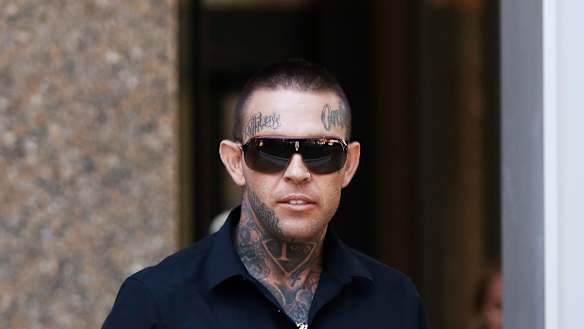
He found all 10 men were involved in serious crime-related activity, for which they had not been convicted of a serious criminal offence, and was satisfied the Nomads and the Finks were both criminal groups which have violence as one of their objectives.
“I reject for the most part that suggestion by the defendants that the incidents … are nothing more than personal disputes between two individuals,” Justice Davies said.
“The evidence overwhelmingly leads to the conclusion that most of the violence stems from a rivalry between the Nomads and the Finks.
“I am satisfied that the safety of members of the public is being put at risk by the ongoing violence between members of the two OMCGs.”
Justice Davies cited information provided by a confidential source who revealed Finks members were required to engage in violence, members of the Finks had firearms including Glock pistols and an AK-47, and Finks members went out on at least one occasion to find Nomads and “engage in violence against them” over the turf war.
He said the most effective way of restricting or disrupting the violence was to prevent the men from associating with one another, acknowledging it would be a “serious restriction on the liberties of the defendants”.
Under the order, the men will be unable to approach or contact any member of any bikie gang, unable to travel in a car between 9pm and 6am except in a medical emergency, must produce their phones and passwords to police upon request, and must not go to any place where a member of any bikie gang lives or works.
They are also prohibited from using encrypted communications including WhatsApp, Wickr and Snapchat, cannot have more than one mobile phone, cannot possess a weapon, and are prohibited from wearing or displaying any insignia or patches from their club.
The Nomads were given slight variations on the conditions which allow them to associate with bikies who are members of their family, and allow them to drive to overnight shift work as long as they inform police, carry their roster with them, and take the most direct route.
Justice Davies rejected two proposed conditions which would have prevented the men going to pubs and clubs and restricted their use of computers, finding they were not reasonable.
He imposed the serious crime prevention order for a year, finding anything less than that would create only a “brief hiatus” before the conflict would be “re-ignited”.
“A period of 12 months has more chance of producing a more permanent end to the conflict because habits and behaviour that have been routine will be interrupted, may possibly be changed in the interim, and will be more difficult to re-establish,” Justice Davies said.
The men were not in court for the judgment.
Comments