Author: bruce.groenewegen

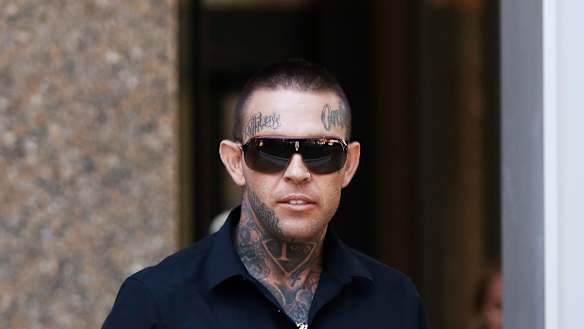
  • Rebels in Western Australia imploding

    A worthwhile watch and read as internal politics and personality clashes tear an OMCG apart.  We have seen it before but yet another example of the falsity of the purported “brotherhood”.

    Rebels bikie gang in mass exodus after stoush between national president Damien Vella and WA boss Karl Labrook | The Nightly

  • Queensland Police – Gangs Exit Strategy

    Outlaw motorcycle members now have a government-backed exit strategy to renounce their allegiance, including counselling and support to tackle any drug and alcohol issues.

    Queensland Police Minister Mark Ryan MP said the “Exit Program” is an Australian first and would assist former outlaw motorcycle gang (OMCG) members wanting a new and crime-free life.

    “This is about helping gang members transform their lives and turn their backs on gangs. it’s the first program of this type in the southern hemisphere,” Mr Ryan said.

    “It’s about connecting ex-gang members with community services.”

    https://www.police.qld.gov.au/initiatives/omcg-exit-program

  • Australian Hells Angels member sentenced to death

    A member of the Perth Chapter of the Hells Angels and his wife were sentenced to death in Thailand for attempting to smuggle half a ton of meth worth $300 million to Australia via Thailand.

    www.9news.com.au/2018/11/14/08/08/perth-man-luke-cook-thailand-death-sentence-drug-smuggling-charges-hells-angels-bikie

  • New decision: South Australia Court of Criminal Appeal

    Please  attached a recent decision from South Australia’s highest Court in respect of sentencing considerations for Outlaw Motorcycle Gang Members, Prospects / Nominess AND associates.  Very good decision in terms of the factors which should be considered.

    Significantly, the judges held:

    1. Both personal and general deterrence are significant considerations when sentencing for the offence of participating in a criminal organisation (per Kourakis CJ at [2], per Nicholson J at [20]).

    2. The fact that a person is a member, nominee or an associate of an outlaw motorcycle gang may of itself support a conclusion that he or she is of bad character with poor prospects for rehabilitation and an enhanced need for personal deterrence, notwithstanding an otherwise moderate or good prior criminal record (per Kourakis CJ at [2], per Nicholson J at [23]-[24]).

    1. Allegiance to a violent criminal organisation is highly significant in sentencing an offender who identifies with an outlaw motorcycle gang as it is relevant to culpability, general and specific deterrence, punishment and rehabilitation. The gang culture of violence and adherence to criminal activities warrants significant weight being placed on general deterrence. Specific deterrence must be given significant weight in sentencing a gang member who freely associates with this culture.

    Obiter per Kourakis CJ

    Feel free to share with your prosecutors!

    http://www8.austlii.edu.au/cgi-bin/viewdoc/au/cases/sa/SASCFC//2018/94.html

  • Judgements in the matters of Serious Crime Prevention Orders

    Attached are the judgements in relation to the Serious Crime Prevention Orders for members of the Finks and Nomads Outlaw Motorcycle Gangs.  Orders made in the Supreme Court of New South Wales.

    https://www.caselaw.nsw.gov.au/decision/5ae11eb3e4b074a7c6e1e98e

    https://www.caselaw.nsw.gov.au/decision/5ae1174ce4b074a7c6e1e96c

  • Serious Crime Prevention orders imposed in NSW

    The Supreme Court has imposed a serious crime prevention order on 10 members of rival Newcastle bikie gangs in the hope of disrupting a volatile and escalating turf war between the groups.

    The order, the first of its kind made in NSW, means five members of the Nomads and five members of the Finks will live under strict conditions for the next 12 months including being unable to associate with each other and unable to wear their club’s insignia.

    Police applied for the orders in the midst of a series of tit-for-tat shootings and fire-bombings targeting Hunter homes early this year, including one incident where a man was shot in the leg. Senior officers branded the situation an “emergency” in which the next shooting was imminent.

    In an application to bring the orders, police said Nomads members Bradley Bowtell, Dylan Patrick Brittliffe, Blake Kevin Martin, James Kenneth Quinnell and Kane Benjamin Tamplin were involved in serious criminal activity, as were Finks members Mitchell Alexander Cole, Benjamin James Main, Andrew Robert Manners, Matthew Francis Maybury and Troy Vanderlight.

    Both groups disagreed, with the five Nomads giving evidence that there was not a war with the Finks.

    On Friday, Justice David Davies found some of the Nomads were “extremely evasive” witnesses, while others “lied constantly” and gave inconsistent evidence.

    He found all 10 men were involved in serious crime-related activity, for which they had not been convicted of a serious criminal offence, and was satisfied the Nomads and the Finks were both criminal groups which have violence as one of their objectives.

    “I reject for the most part that suggestion by the defendants that the incidents … are nothing more than personal disputes between two individuals,” Justice Davies said.

    “The evidence overwhelmingly leads to the conclusion that most of the violence stems from a rivalry between the Nomads and the Finks.

    “I am satisfied that the safety of members of the public is being put at risk by the ongoing violence between members of the two OMCGs.”

    Justice Davies cited information provided by a confidential source who revealed Finks members were required to engage in violence, members of the Finks had firearms including Glock pistols and an AK-47, and Finks members went out on at least one occasion to find Nomads and “engage in violence against them” over the turf war.

    He said the most effective way of restricting or disrupting the violence was to prevent the men from associating with one another, acknowledging it would be a “serious restriction on the liberties of the defendants”.

    Under the order, the men will be unable to approach or contact any member of any bikie gang, unable to travel in a car between 9pm and 6am except in a medical emergency, must produce their phones and passwords to police upon request, and must not go to any place where a member of any bikie gang lives or works.

    They are also prohibited from using encrypted communications including WhatsApp, Wickr and Snapchat, cannot have more than one mobile phone, cannot possess a weapon, and are prohibited from wearing or displaying any insignia or patches from their club.

    The Nomads were given slight variations on the conditions which allow them to associate with bikies who are members of their family, and allow them to drive to overnight shift work as long as they inform police, carry their roster with them, and take the most direct route.

    Justice Davies rejected two proposed conditions which would have prevented the men going to pubs and clubs and restricted their use of computers, finding they were not reasonable.

    He imposed the serious crime prevention order for a year, finding anything less than that would create only a “brief hiatus” before the conflict would be “re-ignited”.

    “A period of 12 months has more chance of producing a more permanent end to the conflict because habits and behaviour that have been routine will be interrupted, may possibly be changed in the interim, and will be more difficult to re-establish,” Justice Davies said.

    The men were not in court for the judgment.

  • ‘I’m over it’: Court hears from Finks state president in police attempt to stop ‘turf war’

    https://www.smh.com.au/national/nsw/i-m-over-it-court-hears-from-finks-state-president-in-police-attempt-to-stop-turf-war-20180411-p4z92k.html

    In a recent phone call at Goulburn Correctional Centre, Andrew Robert Manners had a blunt assessment for police: “Mate, I’m over it.”

    Manners, the state president of the Finks motorcycle club, was referring to a turf war between the Newcastle chapters of his club and the Nomads, which escalated in March when his home was sprayed with dozens of bullets while his partner and her daughter were inside.

    The tit-for-tat dispute has increasingly worried police, who have labelled it an “emergency” and the most significant bikie feud in the state. The Police Commissioner is applying in the Supreme Court for a Serious Crime Prevention Order to be placed on five members from each of the clubs.

    The applications – the first of their kind brought in NSW – are part of a police crackdown, with officers carrying out extensive raids in the Hunter last week as part of a “relentless” pursuit of the clubs to stop further “imminent” violence.

    If Justice David Davies imposes the orders, the ten men would be subject to strict conditions including not being allowed to associate, being banned from pubs and clubs, banned from travelling in any vehicle from 9pm to 6am, and restricted from using encrypted communications like Wickr, Snapchat or WhatsApp.

    They will also be restricted from owning more than one mobile phone, must produce their phone and passwords to police upon request, and will not be allowed to wear or display any insignia or patches from their club.

    Both clubs have opposed the orders in court.

    In a hearing on Wednesday, police barrister Mark Tedeschi QC said the orders sought against Manners and other Finks members Mitchell Alexander Cole, Benjamin James Main, Mathew Francis Maybury and Troy Vanderlight were “necessary” for the protection of the public.

    He said police raids last week unearthed crossbows and arrows, a balaclava, a lock-picking gun, a taser, knuckle dusters, a gun barrel, an extendable baton, and four explosive detonators.

    “[The detonators] are explosives in themselves, but can also be used to set off larger explosive devices,” Mr Tedeschi said.

    “On the afternoon of that same day, the fifth of April this year, police located a failed incendiary device in a laneway behind the premises of the Nomads vice president in that area. [The] device contained flammable liquid, which showed every sign an attempt had been made to detonate it.”

    Defence barrister Peter Lange said “nothing of interest” had been seized from his clients , except “Finks-related merchandise” and a “gang clothing ledger”.

    The explosive detonators were found at a premises linked to the Nomads, he said, denying his clients had been involved in “acts of so-called retribution”.

    “There is simply no evidence to support the contention any of these defendants is directing acts of violence,” Mr Lange said.

    The court previously heard police had spoken to senior bikies in an attempt to defuse the situation, in which several homes have been targeted with weapons including molotov cocktails, pistols, a shotgun and a rifle.

    In a jail phone call played to the court, Manners told two detectives he was the only one who could sit down with the Nomads, and “trying to bust my boys’ balls to talk” was “not going to work”.

    “I’m the voice for the Finks, so there’s no point trying to trash us and do shit to us,” Manners said.

    “If you can help me out and line it up, I’ll sit down straight away.

    “I’m about over it just as much as you are. Mate, I’m over it. We’re fighting over turf, I don’t think we’ve even got someone there any more.

    “We can have one of them [Nomads] and just me so we’ve got no dickheads talking bullshit. You get me out, you get the big boss of them, I’ll sit down and talk to them.”

    Manners, wearing a green prison t-shirt, listened silently via audio-video link from Goulburn for the entirety of the hearing.

    He is due to apply for bail on Thursday.

    Justice Davies reserved his judgment.

    RELATED STORY: https://www.smh.com.au/national/nsw/nomads-bikies-deny-open-warfare-with-finks-in-newcastle-20180329-p4z6wy.html